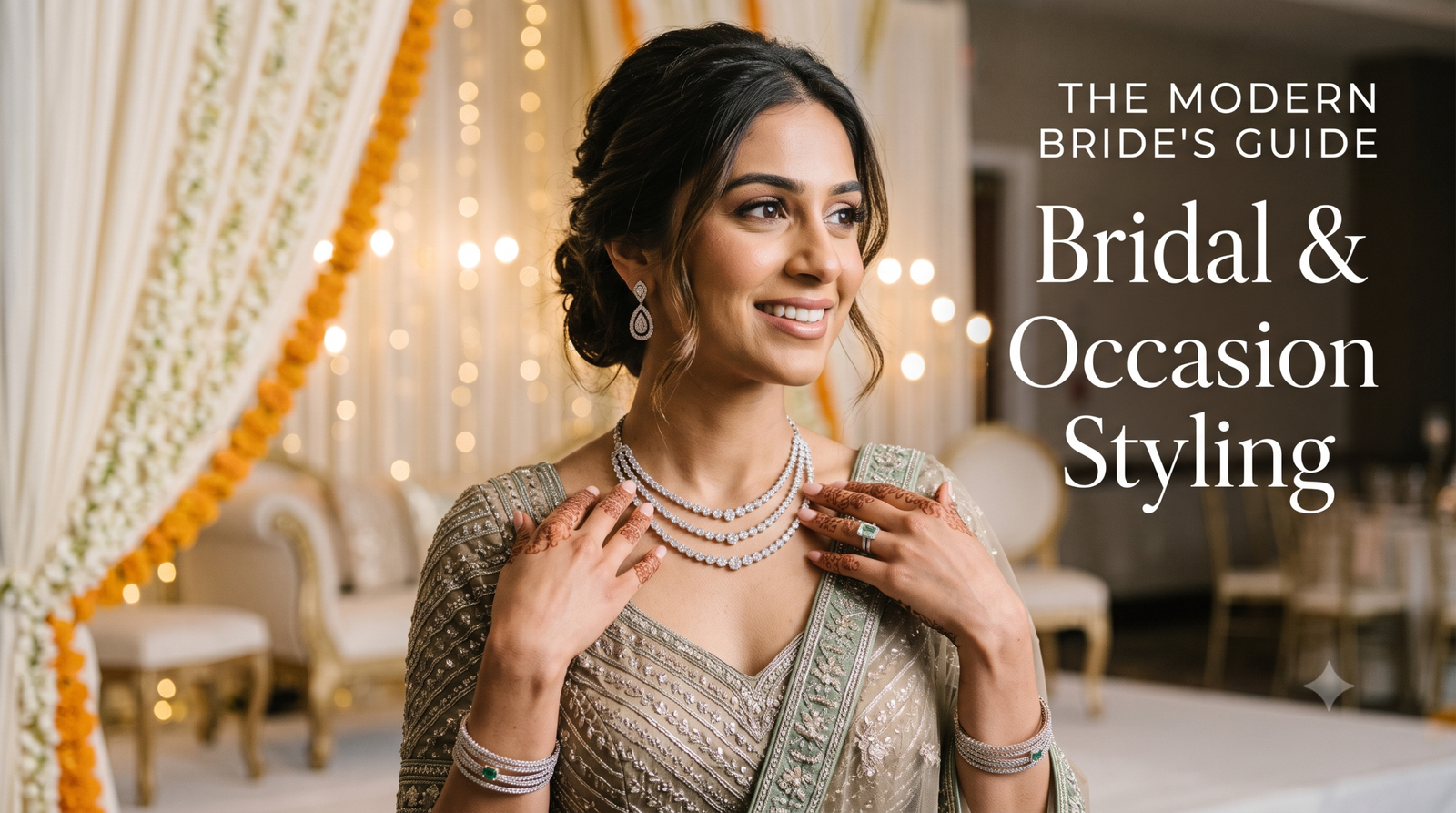
The Smart Buyer: Gold & Diamond Alternatives
Solid 22K Gold vs. 925 Demi-Fine Silver: The Real Cost Breakdown For decades, buying wedding and festive jewellery in India followed an unquestioned logic: buy solid 22K gold, treat it as an appreciating hedge, and accept high retail markups as the cost of tradition. However, gold pricing dynamics have dramatically changed the equation. With 22K physical gold hovering around ₹1,40,000 to ₹1,45,000 per 10 grams, traditional purchasing patterns face structural strain. A modest 50-gram bridal choker and earring set that once cost ₹2.5–3 lakh now easily demands ₹8–10 lakh once taxes and artisanal charges are tallied. As a result, smart buyers are separating financial investing from sartorial accessorizing. The solution? Holding core investment assets in sovereign bonds, ETFs, or bullion, while building wearable, high-fashion trousseaus using 925 demi-fine silver and lab-grown diamonds. The Hidden Financial Friction of Traditional Gold Buying When you purchase an ornate bridal necklace from a traditional high-street jeweler, the sticker price consists of three distinct components: When you step out of the showroom, the making charges and wastage fees evaporate from your balance sheet. Should you ever sell or melt that piece back down, jewellers deduct making fees, melt loss, and exchange margins—instantly writing off 15% to 30% of your outlay. By choosing the demi-fine equivalent, you free up nearly ₹9.5 lakh in capital. Placed into high-yield instruments or gold ETFs, that capital stays liquid, while your jewellery wardrobe delivers the exact same visual weight, sparkle, and design sophistication at weddings and family galas. Physical & Aesthetic Comparison: 22K Gold vs. 925 Demi-Fine Evaluation Criteria Solid 22K Gold 925 Demi-Fine Silver (Vermeil / Rhodium) Material Composition 91.6% Pure Gold + 8.4% Alloy (Copper/Silver) 92.5% Pure Silver + 7.5% Structural Alloys Visual Appearance Rich, saturated yellow; traditional warm glow Identical finish when vermeil-plated; cooler, crisper shine when rhodium-plated Stone Security Softer metal; prongs can loosen over years of wear High structural tensile strength; holds lab-grown diamonds securely Skin Compatibility Naturally hypoallergenic Hypoallergenic when engineered nickel-free and lead-free Theft & Insurance Risk High anxiety; requires home safes or bank lockers Low stress; effortlessly portable for destination travel Cost per Wear High (worn 1–2 times every few years due to security fears) Low (styled effortlessly for parties, dinners, and family functions) Demystifying the “Investment Value” Myth The most common objection to demi-fine jewellery is: “Silver doesn’t hold the resale value of gold.” While technically true in terms of scrap metal resale, this perspective misses the real economic picture: jewellery is worn art, not an emergency liquidity tool. If you view jewellery purely as a financial asset, buying ornate gold sets loaded with non-recoverable making charges is inefficient compared to buying digital gold, ETFs, or bullion coins. Buying demi-fine allows you to separate the two jobs: When you weigh ₹60,000 against ₹10,00,000 for virtually identical aesthetic impact across wedding photographs and gala evenings, the rational choice for the modern, forward-thinking woman becomes clear.